
When PPP loans arrived in 2020, they were meant to help businesses keep employees paid through the pandemic. Plenty used them that way. The rush of money also attracted people whose first thought was how to get a piece of it.
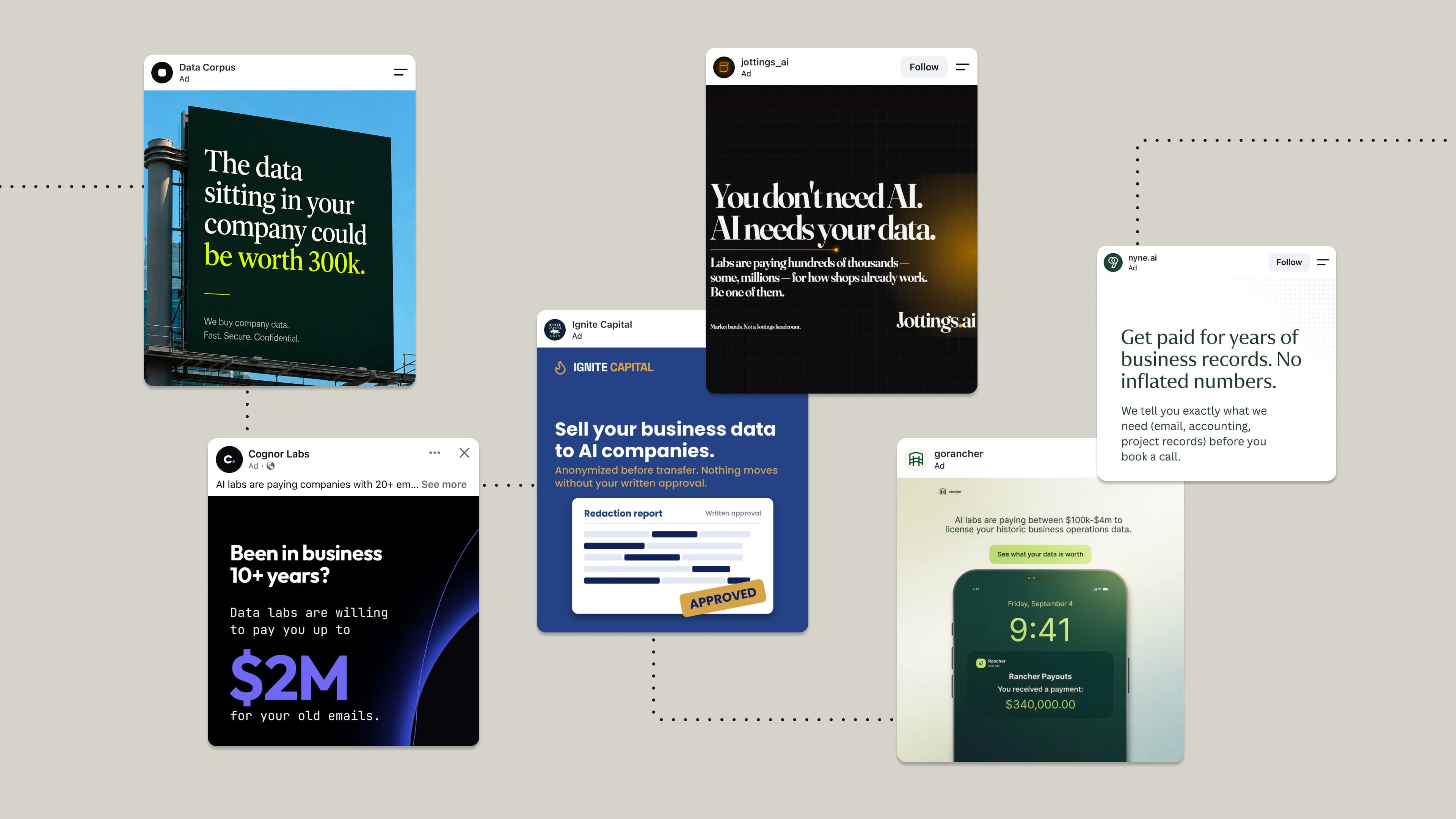
I’m watching something similar happen around company data. There are reputable buyers willing to pay for useful datasets, but now there are ads from companies like SHFA.ai promising founders $1 million, $3 million, even $5 million. Those numbers can make a new company look like an established buyer.
I recently spoke with a would-be buyer whose company had launched only weeks earlier. As far as I could tell, he was the whole team. I left the call wanting to know whether his company had ever bought a dataset and how it would fund a purchase. As more of these companies pop up, founders need to be aware of who they are talking to when it comes to selling their data. Here's what to look out for.
Check who is making the offer
A new company can be a serious buyer, but a seven-figure offer deserves more than a landing page and a promise that a deal is coming. Start with a few basic checks:
Company history: when it launched, who founded it, and what they have done before.
Completed deals: whether it has bought a dataset from another startup and paid for it.
The buyer chain: whether it will use the data itself or broker the deal, who will receive the files, and who is funding the purchase.
I would be especially careful with anyone who wants a full export before they can give you a meaningful offer. Pulling together years of Slack, Drive, tickets, and code takes real work. You can discuss the types of assets you have and share a limited sample without opening up the whole company to someone you have only just met.
Decide what belongs in the deal
Startup data can mean source code, product databases, design files, internal documentation, customer records, or workplace conversations. Those aren’t one asset, and a buyer interested in one of them doesn’t automatically need the rest. Pin down what the buyer wants and decide which parts of the company you’re willing and able to include.
Sometimes the context around an asset is what makes it useful. A feature traced from a Notion spec through Figma designs and Jira tickets to the finished GitHub code tells a fuller story than the repository alone. You can put that history together without including every Slack DM, Gmail thread, or HR folder. Having a defined set of files also makes it possible to review them properly before anyone else gets access.
Look closely at what is in the files
Company data is rarely just the founder’s information. Employees, customers, vendors, and investors may be represented throughout the material. Before preparing an export, check for:
Personal and customer information, including employee details, health information, and payment data.
Confidential or third-party material you may not have the right to transfer, including licensed data and open-source code with its own terms.
Live credentials such as API keys and access tokens, which can be buried in code, tickets, and attachments.
Work out what you have the right to transfer and what should be removed or anonymized. A folder that looks like product documentation can have attachments or comments that tell a very different story.
Scrubbing a dataset is more work than exporting it and deleting a few names. Sensitive details can be buried in Slack messages, tickets, code, Drive files, and metadata. Know who is doing that work and when. If the buyer receives the raw files first and promises to clean them up later, you have already given that buyer access to the material you meant to remove.
You can get far enough in a conversation to understand a potential offer without handing over everything at once. Agree on the scope, prepare the material you are comfortable sharing, and be clear about who can access it as the deal progresses.
Get specific about price and payment
An ad offering up to $5 million doesn’t tell you what this buyer will pay for your assets. The agreement should state the actual price, what must happen before payment is due, and when it will arrive. If you’ve been dealing with an intermediary, know which company is signing, which one owes you the money, and where that money is coming from.
With assets from more than 350 companies coming through AssetHub, we’ve spent a lot of time sorting through what buyers want and what founders are comfortable selling. If you’re weighing an offer, reach out to our team and we can talk it through.